S. Polo, 3072 – 30125 Venezia
+39 041 2728618
parrocchia.frari@gmail.com
https://www.basilicadeifrari.it/
A Treasure Chest of Art in Venezia
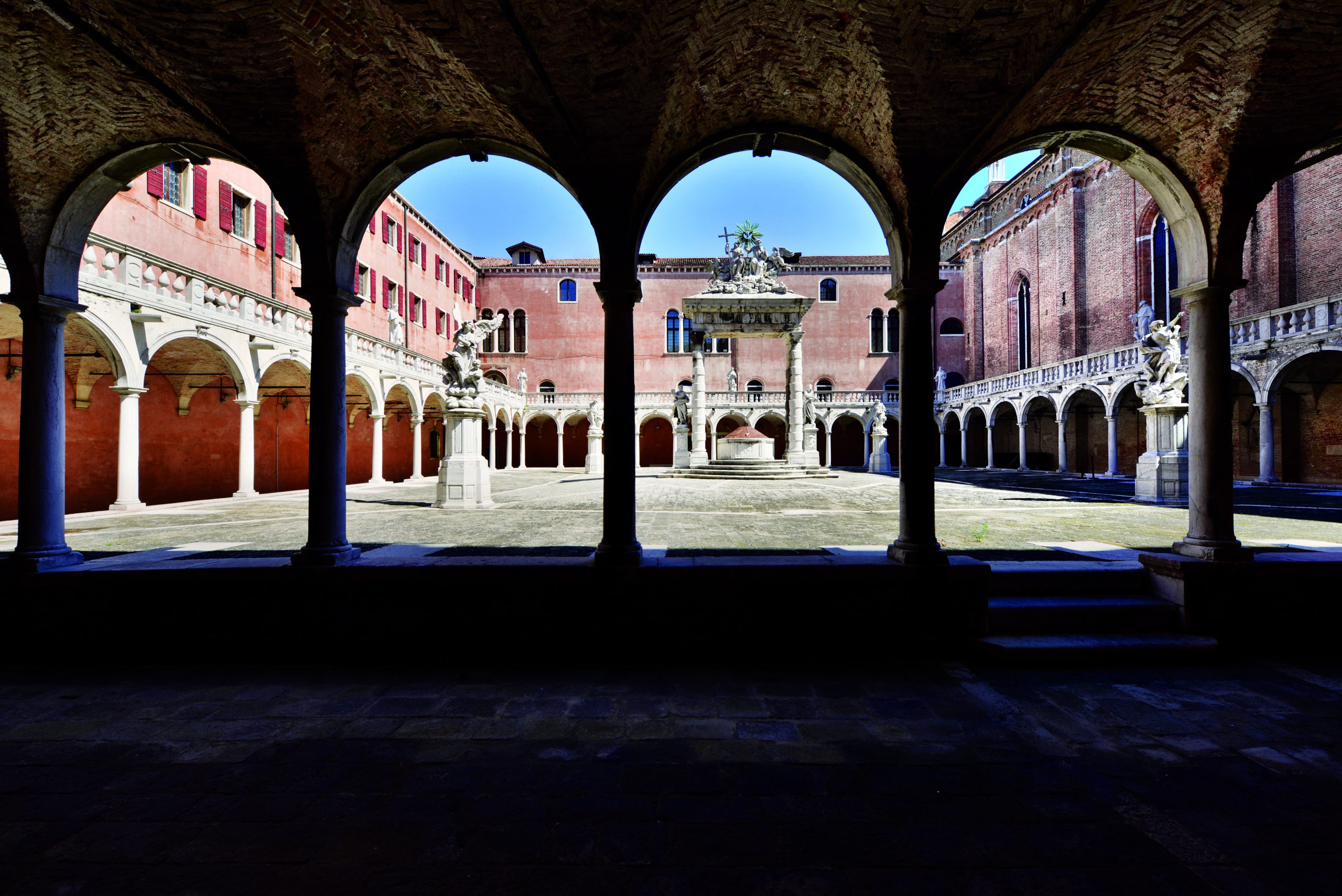
The history of the Friars Minor in Venezia, affectionately called the “frari,” began around 1200. Initially, the Most Serene Republic granted them a modest oratory in a marshy area. However, the growing community soon made it necessary to build a larger church, erected around 1250. This second building was in turn replaced by the imposing structure we admire today: the Basilica of Santa Maria Gloriosa dei Frari. Work on this majestic building began in 1330 and continued until around 1440, culminating in its consecration in 1492, when it was dedicated to the Virgin of the Assumption.
The “Ca’ Granda dei Frari” went through a period of great hardship after the fall of the Republic. The Napoleonic suppressions of 1810 forced the friars’ community to leave, and the convent was drastically transformed into barracks for French troops. Fortunately, the church remained open for worship, becoming a parish church. A turning point came during Austrian rule, when in 1815 the convent was assigned to house the Venetian General Archive—today’s Venezia State Archives—marking the beginning of a slow but steady revival. At the beginning of the 20th century, a major restoration campaign restored the church’s former splendor, and in 1922 the Conventual Franciscan Friars were finally able to return. Further recognition of its value came in 1926, on the occasion of the 7th centenary of the death of St Francis, when the church was elevated to the rank of minor basilica.
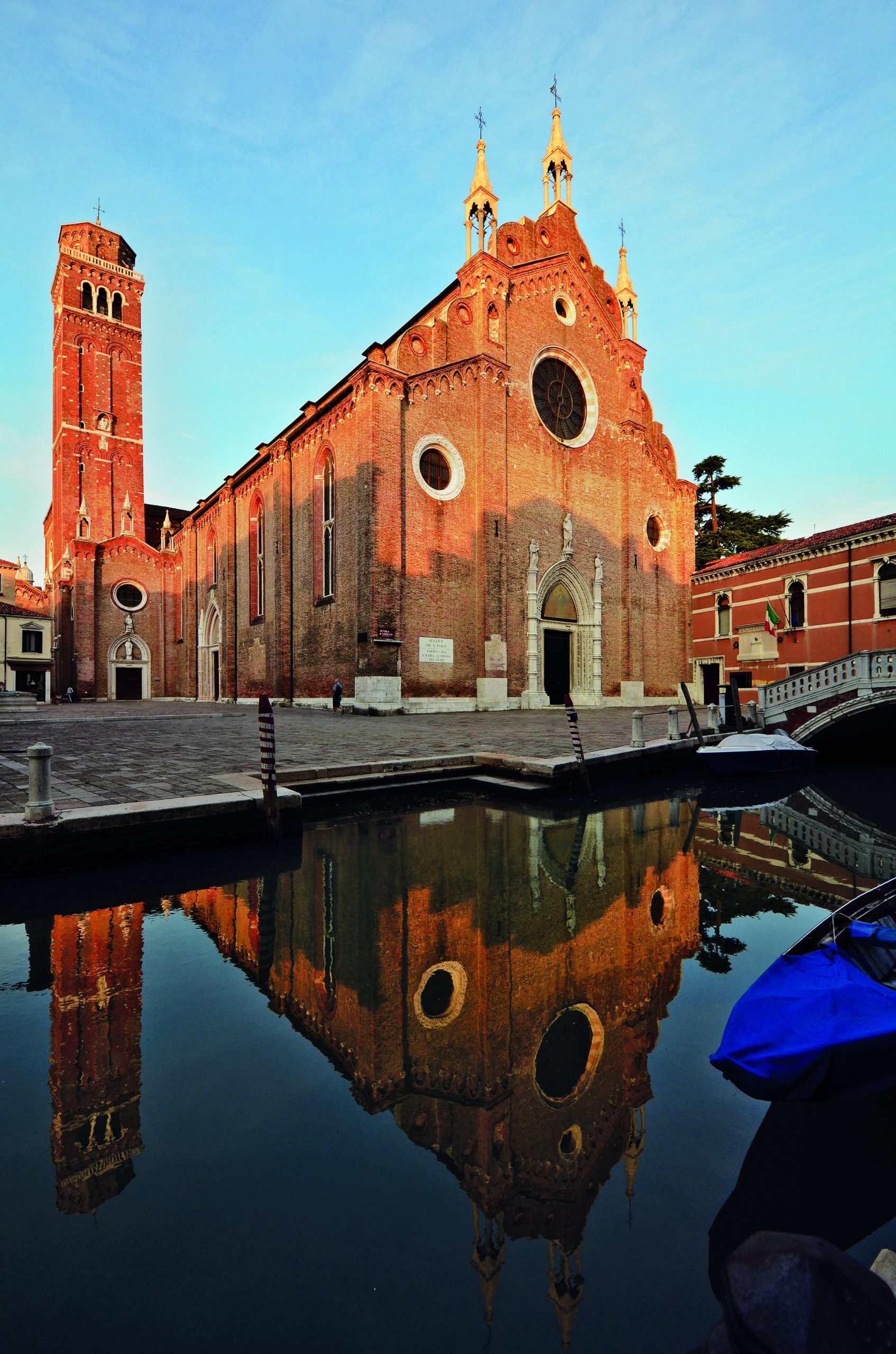
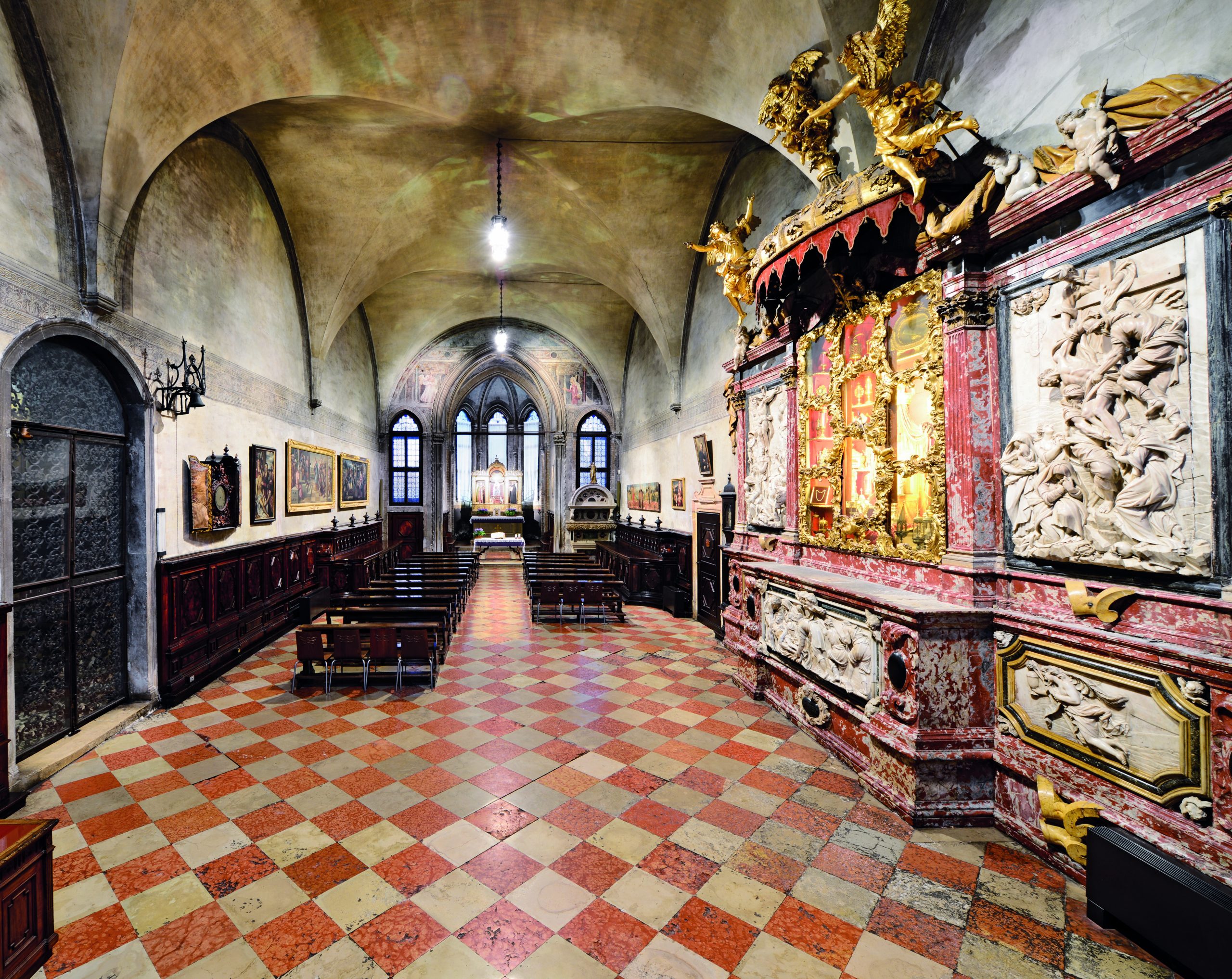
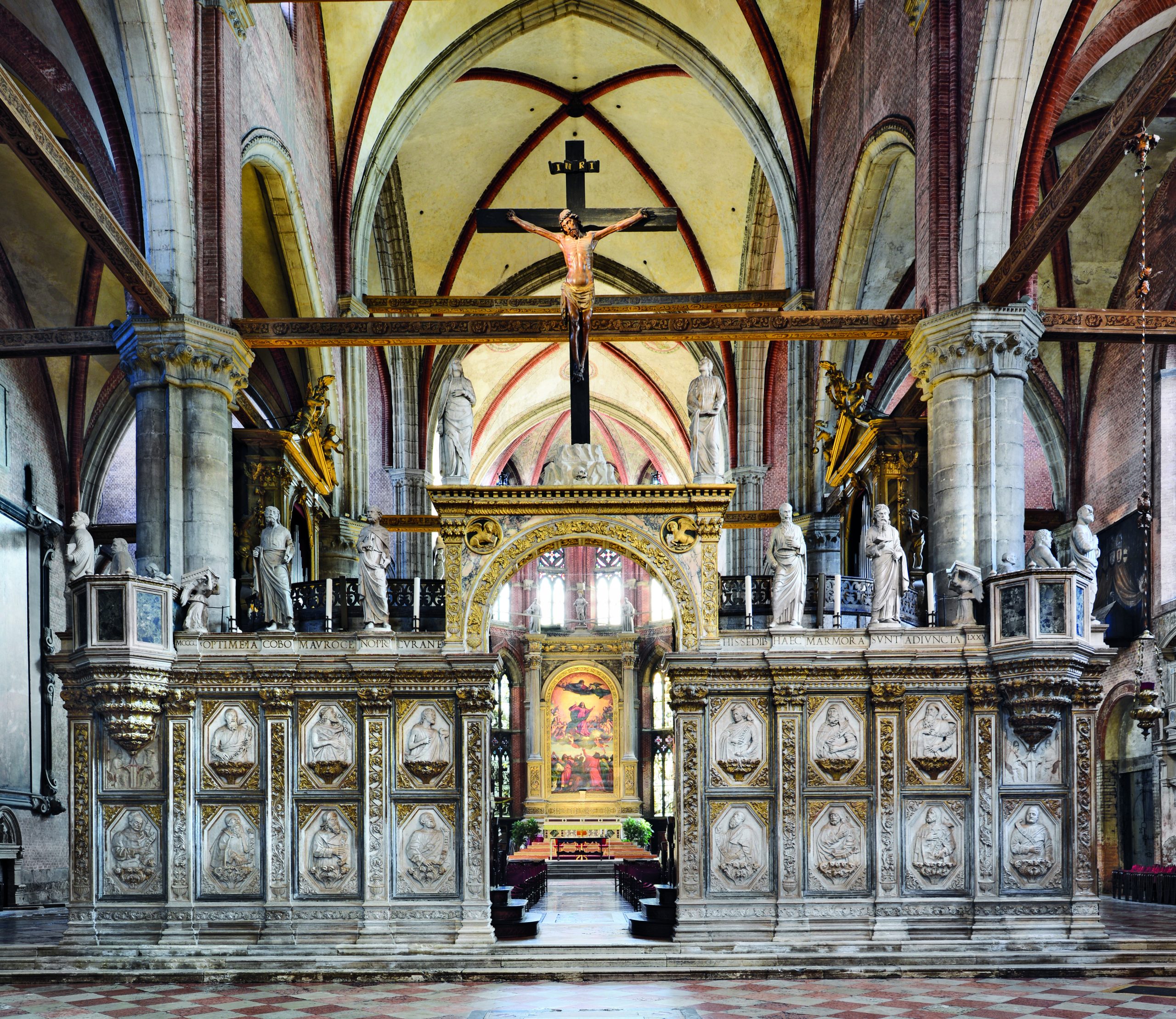
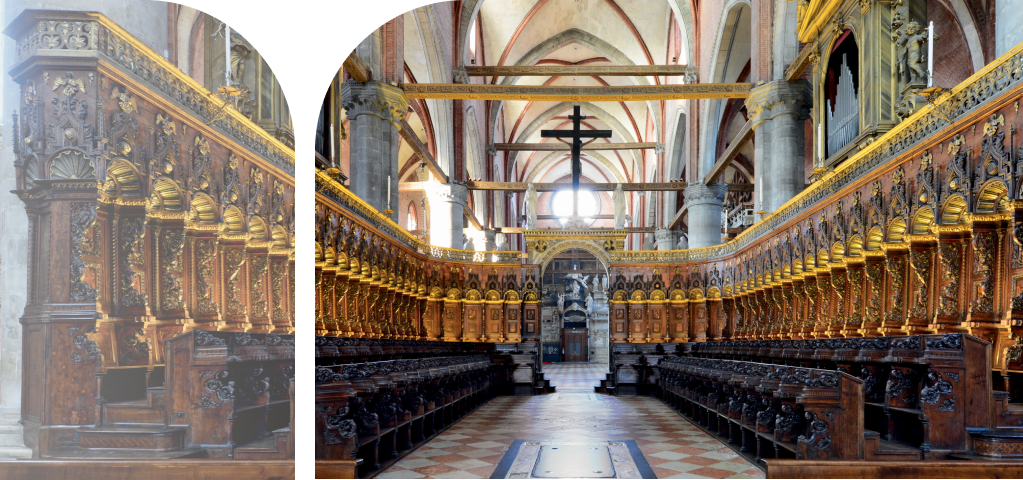
Over the centuries, the Frari Basilica has become a true treasure chest of art, housing an extraordinary collection of masterpieces. Among the works on display, those by masters such as Donatello, Palma il Giovane, Paolo Veneziano, Baldassarre Longhena, the Delle Masegne, Bartolomeo Vivarini, Bernardino Licinio, and Giovanni Bellini stand out. A leading role is played by Titian, with two works of inestimable value: the “Pesaro Altarpiece”, which not only addresses the theme of the Immaculate Conception but also celebrates Venezia’s victory against the Turks in the Battle of Santa Maura in 1503; and above all the iconic “Assumption of the Virgin”, universally known as the “Assunta”.
In addition to caring for and safeguarding the Basilica and its precious treasures, the friars also manage three other smaller institutions today—no less significant for their artistic and historical richness: the churches of San Polo, San Pantalon, and San Nicola da Tolentino.