Via Dante Alighieri, 4 – 48121 Ravenna
+39 0544 33667
+39 320 9750842 (Manager)
Monday–Friday: 10:00–12:00; 15:00–17:00. Saturday: 10:00–12:00.
The Franciscan Dimension in Dante
The Dante Centre was founded in Ravenna by Father Severino Ragazzini (1920–1986) on the eve of the 700th anniversary of Dante Alighieri’s birth.
The Institute carries forward a precious legacy: the longstanding relationship between Dante and the Franciscan world. This bond is rooted in his contacts with the friars in Florence and Ravenna, where he lived during his exile. It was the Friars Minor—figures such as Giovanni Bertoldi da Serravalle, Antonio d’Arezzo, Pietro da Figino, and later Baldassarre Lombardi and Stefano Ignudi—who helped preserve and pass on his greatness. Our commitment is grounded in a strong statement, an idea expressed by Popes Benedict XV and Paul VI: “Dante is ours.”
The Centre promotes research into the Christian identity in Dante Alighieri’s work, examining it from historical, political, theological and spiritual perspectives.
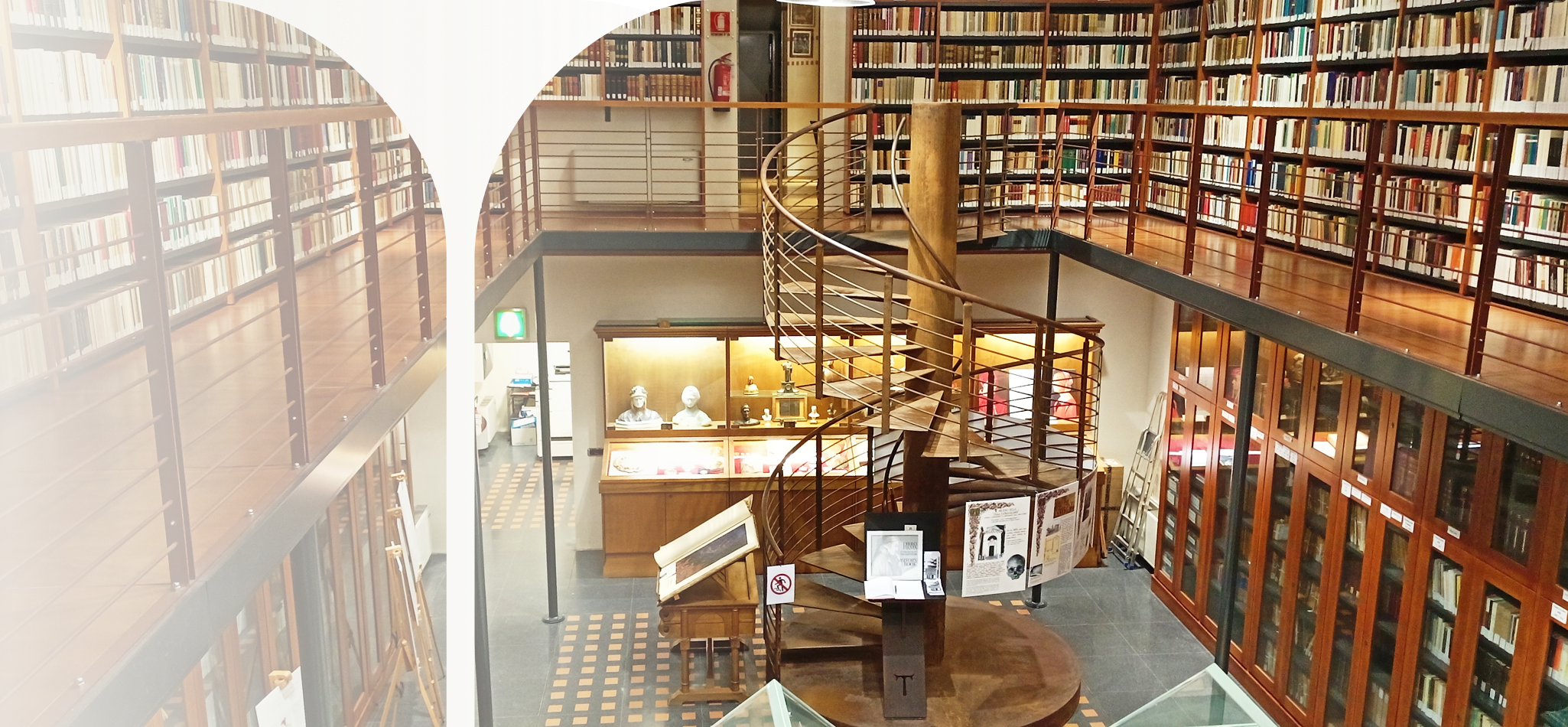
Housed in the cloisters of San Francesco, the Centre includes a library of more than 20,000 volumes, including rare items such as manuscripts, incunabula and printed editions of Dante’s works and studies on Dante dating back to the 14th century.
The Library was recognized as being of “exceptional interest” by the Ministry for Cultural and Environmental Heritage in 1981, and in July 2000 it joined the Romagna library network within Italy’s National Library Service (SBN).
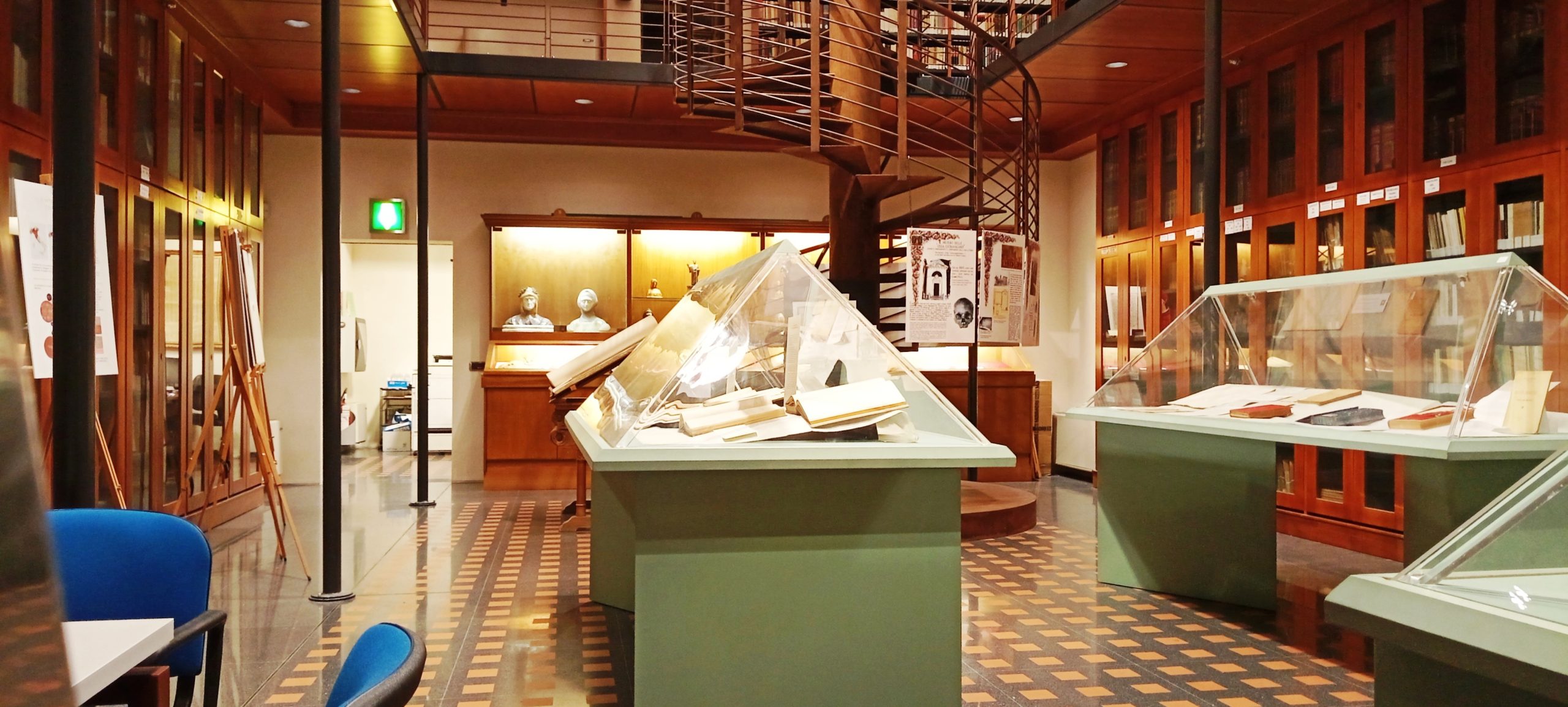
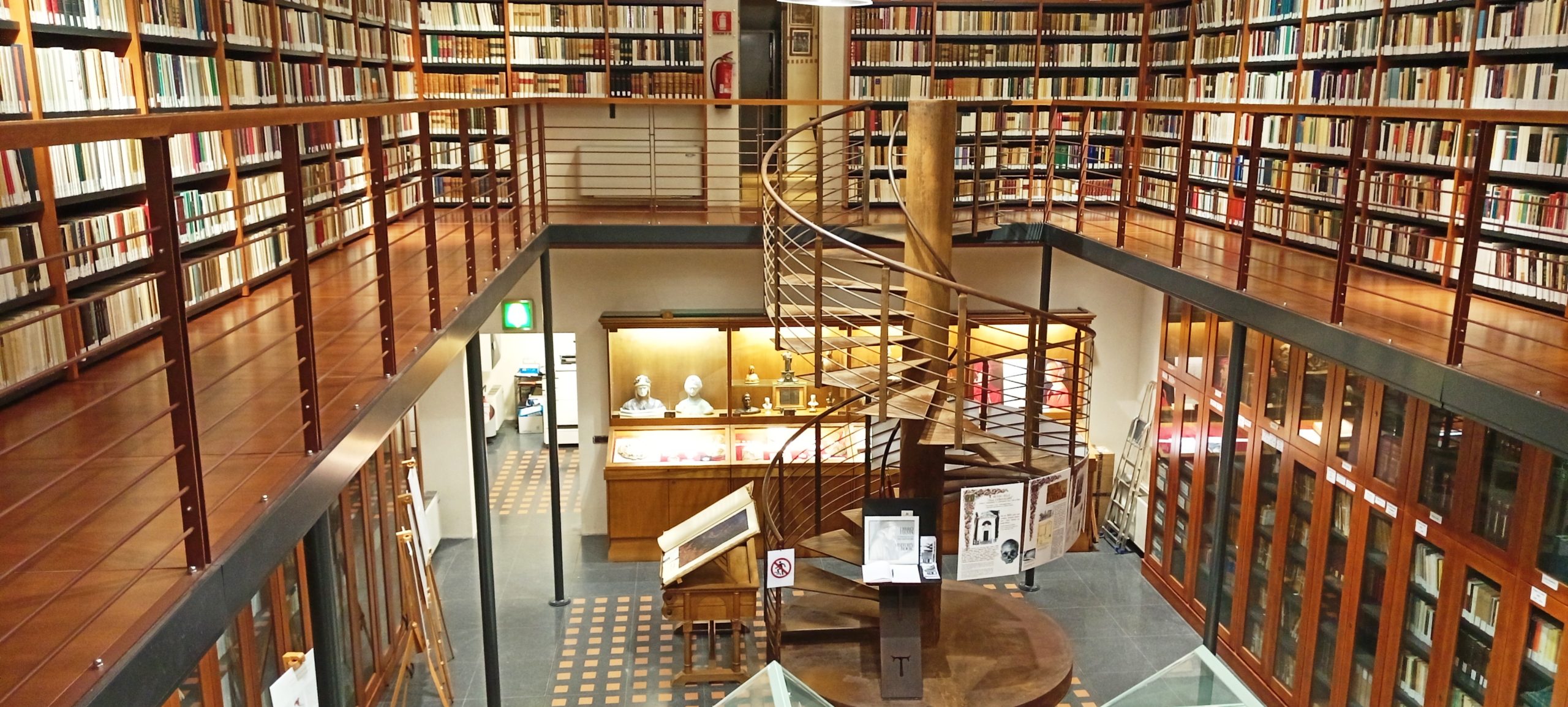
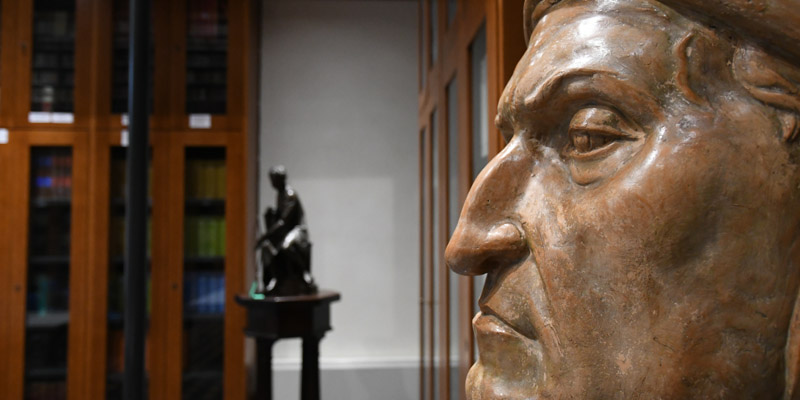
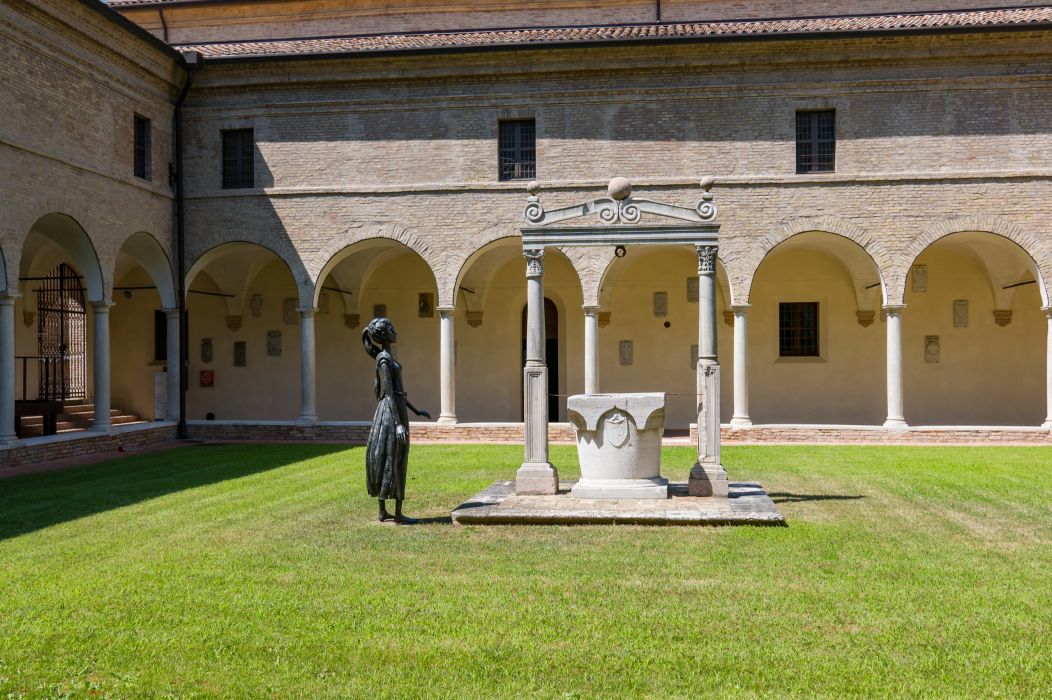
In addition to books, the Centre also preserves curious items such as postcards, stamps, collectible cards, badges, medals and small bronze sculptures, as well as a fine collection of more than 150 terracotta sculptures (the Copat donation).
In 1989, an ongoing exhibition of artworks connected to Dantean themes was set up on the upper floor of the cloister within the Centre. It focuses in particular on small sculpture and bronze medals acquired through the artistic showcases promoted over the years; since 1997, the museum has been part of the provincial museum system. In addition, thanks to the multimedia rooms installed in the Franciscan cloisters, visitors can experience an immersive narrative itinerary through the Commedia, retracing—ideally—the journey described in its three canticles.