Piazza San Francesco, 3
48121 RAVENNA
Tel. 054433256
Church of St. Francis
Since September 12, 1261, the Conventual Friars Minor have been present in Ravenna. The Basilica of St. Francis, originally dedicated to the Holy Apostles and later to St. Peter, dates back to the mid-5th century AD. Very little remains of the original Paleochristian church, mostly due to the continuous rebuilds that occurred over the centuries. Specifically, between 1261 and 1810, and then again from 1949 to the present, the Franciscan friars chose it as their headquarters, with the current dedication to St. Francis.
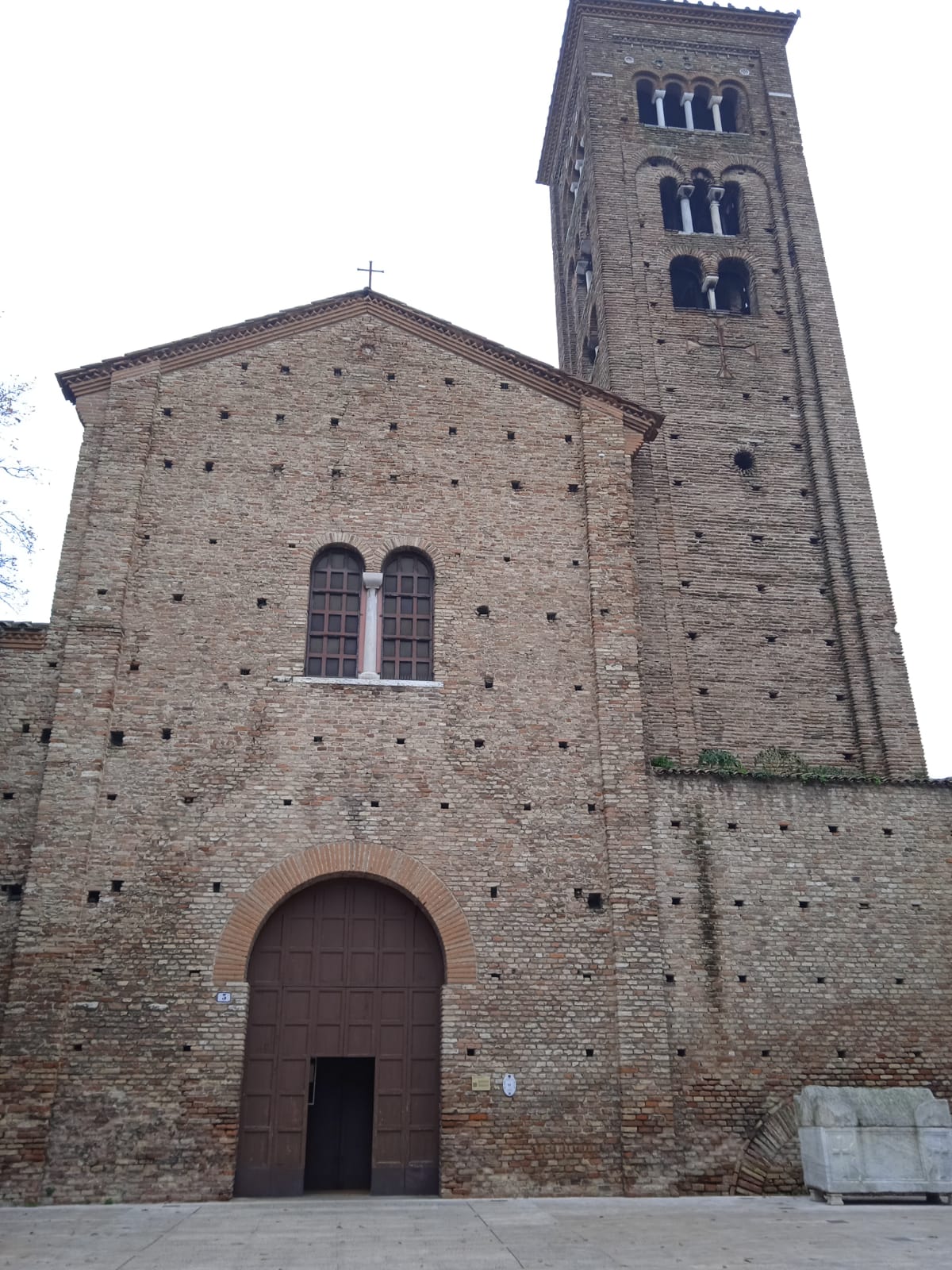
The restoration of 1921 – coinciding with the 6th Centenary of Dante’s death – introduced a series of changes that dismantled the existing Baroque additions, restoring the basilica to the severe linearity characteristic of the 14th century, more fitting to the spirit of the Franciscan Order. A basilical layout with three naves, separated by two rows of 12 columns each, characterizes the architecture of St. Francis. On the side, outside, a robust square bell tower from the 9th century enriches the facade, giving it an additional charm.
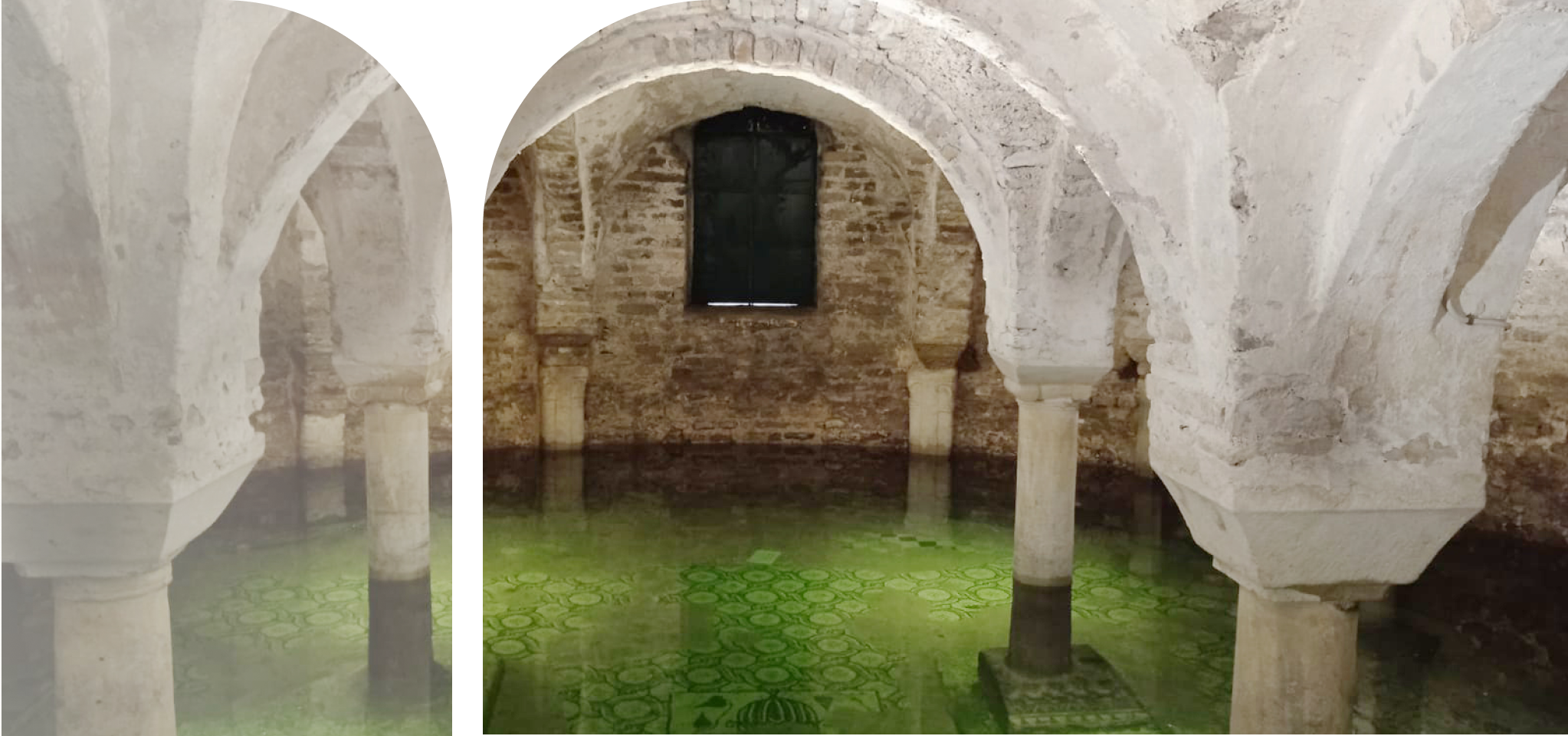
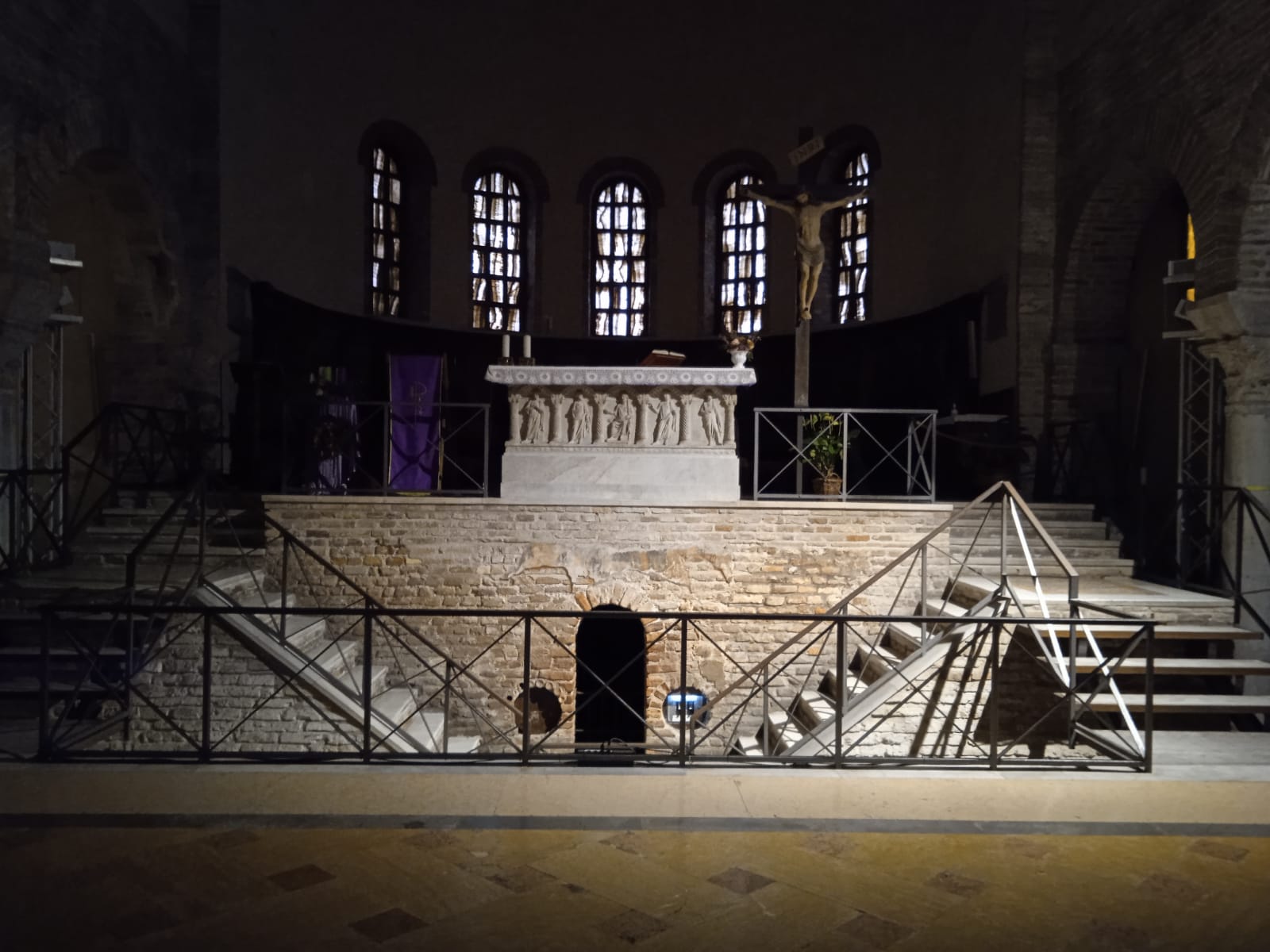
Particularly beautiful is the semicircular apse inside and heptagonal outside, which due to the phenomenon of subsidence today appears lowered by 3 and a half meters compared to the more recent floor. Through a window placed under the main altar, made from a 5th-century sarcophagus, one can glimpse the 10th-century crypt, a small oratory supported by small columns, intended to house the relics of Bishop Neone, founder of the church. The crypt floor is constantly submerged by water, which, however, allows one to admire the mosaic fragments of the original church’s floor.
Along the right nave, the basilica also hosts three beautiful chapels dating back to the mid-16th century: the first, by the sculptor Tullio Lombardo, once housed the statue of Guidarello Guidarelli, now displayed at the MAR – Museum of Art in Ravenna; the second is a central chapel dedicated to St. Anthony; finally, the third is dedicated to St. Roch, with a dome frescoed by Andrea Barbiani (1755) and a canvas by Gaspare Sacchi (1517–1536).
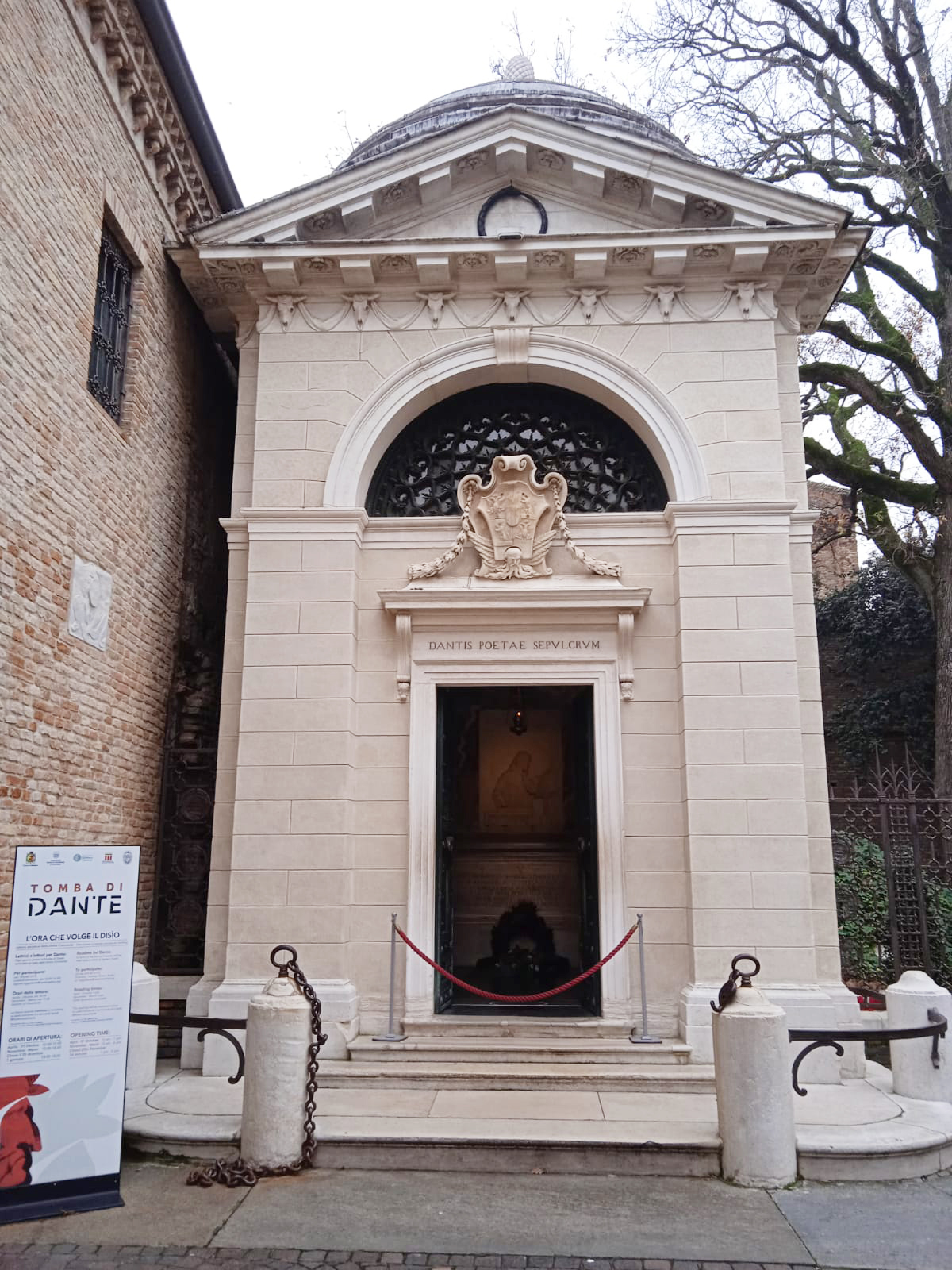
THE FRANCISCANS CUSTODIANS OF DANTE’S TOMB
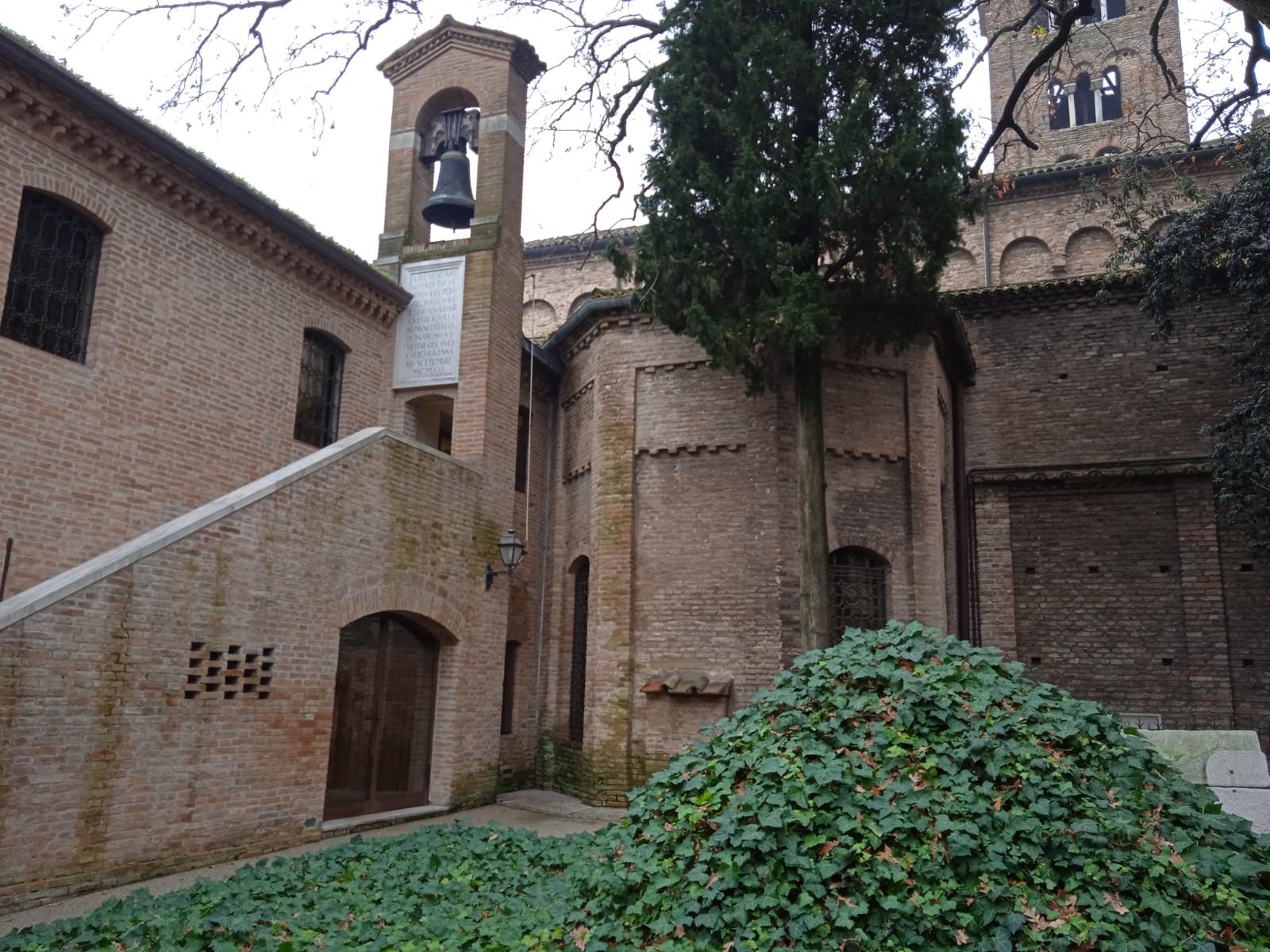
The Franciscan history in Ravenna cannot be traced without mentioning the story of Dante, who spent his last years in this city. The first certain fact, however, dates back only to his death, which, as scholars now agree, occurred between September 13 and 14, 1321, and to his funeral, during which the “more solemn” citizens of the city carried Dante’s body “to the place of the Minor Friars,” where he was buried in a stone urn against the outer wall of the convent’s cloister.
And there he remained for about two centuries, until the friars were certain that the Florentines, finally having received the papal permission, would come to transfer the disputed remains to their city and give them an honored burial in the tomb that Michelangelo himself had committed to making. It must have been relatively simple for the friars to break through from inside the cloister and retrieve from the sarcophagus, placed against the outer side of the same wall, what remained of Dante’s body.
After their theft, the bones were likely kept in the convent until we know for sure when. They were certainly there in 1677 when Brother Antonio Santi, who was the superior and chancellor of the Ravenna community, carried out a double certified inspection. However, it was decided to hide them, certainly before 1810, when, following the Napoleonic laws that suppressed religious orders and seized their properties, the friars had to abandon the convent.
But they buried them not far away, under the threshold of a bricked-up door, just a few steps from the empty tomb, perhaps hoping to recover them in a more favorable future. But the return was not immediate, and the bones were forgotten until, on May 27, 1865, during restoration work on the small temple and arrangement of the adjacent area for the city celebrations of the 6th Centenary of the Poet’s birth, they were fortunately rediscovered.
Great was the joy and solemn were the celebrations, at the end of which the bones were finally placed in the small temple built by Camillo Morigia between 1780 and 1781, the so-called “zucarira” (the sugar bowl in the local dialect) – as it is affectionately called by the Ravenna people.