Piazza Malpighi, 9 – 40123 Bologna
051.221762
sanfrancescobologna@gmail.com
https://www.sanfrancescobologna.org/
Everyday 6.45-12 / 15.30-19
Franciscan Bologna
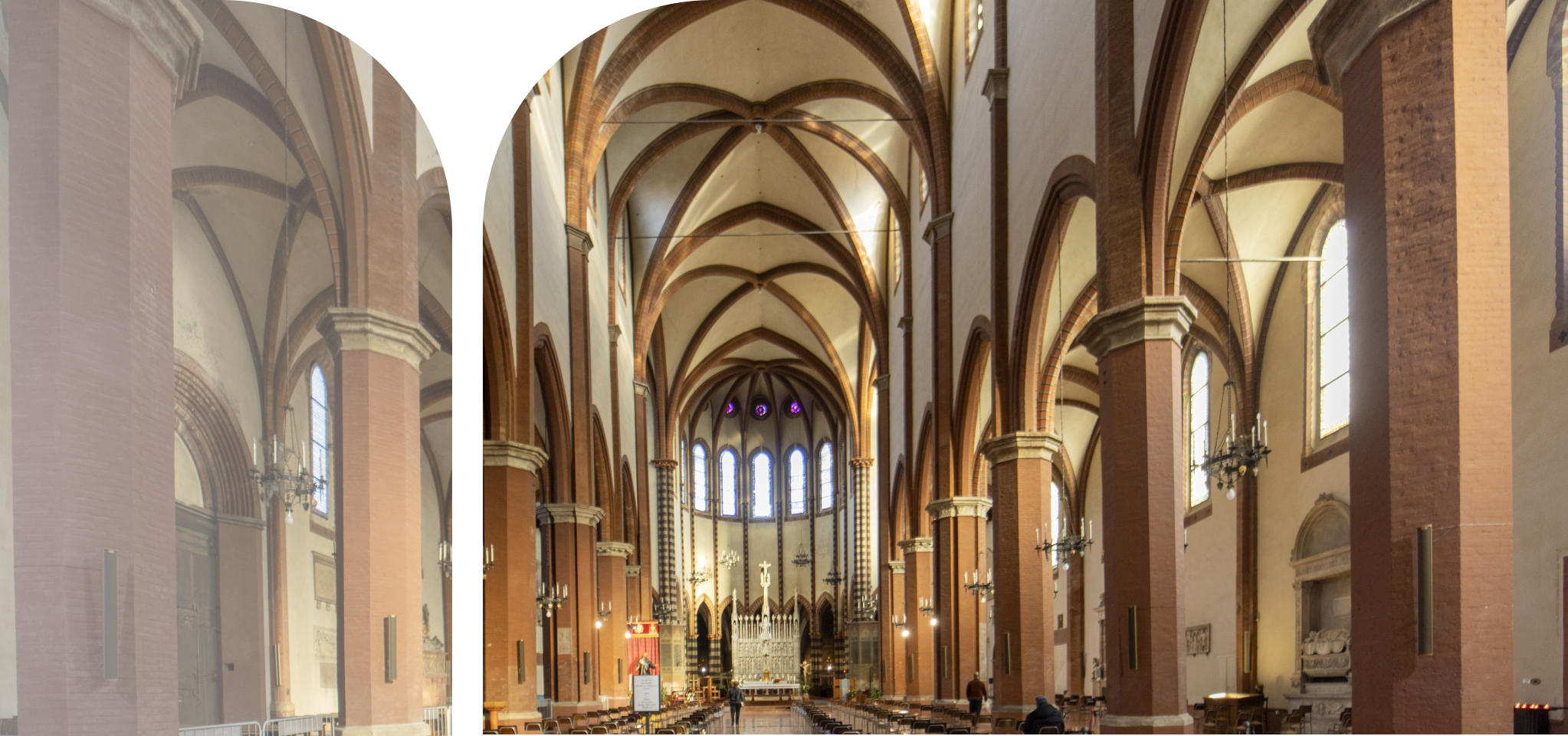
St. Francis in Bologna, elevated to the title of Basilica in 1935, stands out as one of the earliest churches built in honor of St Francis, perhaps surpassed only by the one in Assisi. Its construction began in 1236, a decade after the Saint’s death, whose influence in Bologna was profound. Francis himself passed through in 1219 on his return from the East, after having sent his fellow friar Bernard of Quintavalle in 1211, and he returned in 1223 for a peace “sermon.” Bologna also hosted St Anthony of Lisbon between 1222 and 1224, where he presumably received authorization from Francis to teach theology.
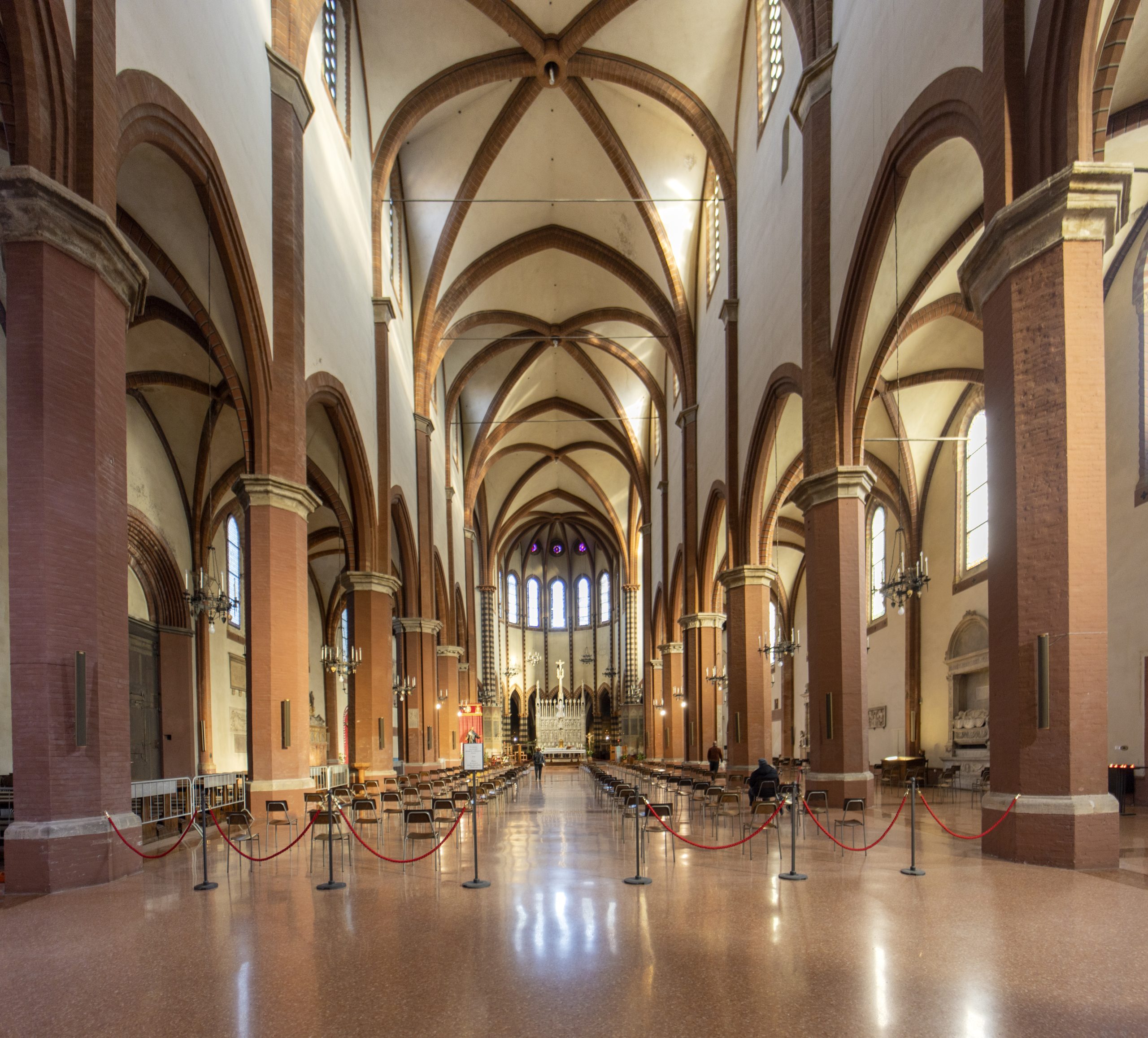
Architecturally, the church is a fine early example of French Gothic in Italy. Its history is marked by turbulent periods: in 1796, Napoleonic troops looted it and transformed it, together with the convent, into a customs house. Although the friars returned about forty years later to begin restoration work, the annexation of Emilia to the Kingdom of Sardinia-Piedmont and the subsequent suppression of religious orders saw it used as a warehouse and barracks in 1866.
A new chapter opened in 1886, when the National State Property Office transferred it to the Municipality, which returned it to the Archbishop for worship. Under the guidance of Alfonso Rubbiani, the Fabbriceria undertook significant restoration work. Further interventions became indispensable after the bombing of 24 July 1943, which did not spare the “beautiful San Francesco.”
The church’s artistic heritage includes the imposing late-14th-century marble altarpiece by the Venetian brothers Jacobello and Pierpaolo delle Masegne, and the polychrome terracotta tomb of Alexander V, the Franciscan antipope, made by Nicolò di Pietro Lamberti and Sperandio Savelli. The bell tower, dating from the turn of the late 14th to the early 15th century, was designed by Antonio da Vincenzo, who also oversaw the Basilica’s first private chapel, the Muzzarelli Chapel, once the old sacristy.