Saint Anthony Shrines
Via Sant’Antonio, 6 – 35012 Camposampiero (PD)
Tel. +39 049 9315711
https://santuariantoniani.org/
St. Anthony Oasis – House of Spirituality
via s. Antonio 2 – 35012 Camposampiero (PD)
Tel. 049.9303003
For courses and training offerings: corsi@casadispiritualita.it
For hotel accommodation: accoglienza@casadispiritualita.it
Contemplation and Prayer
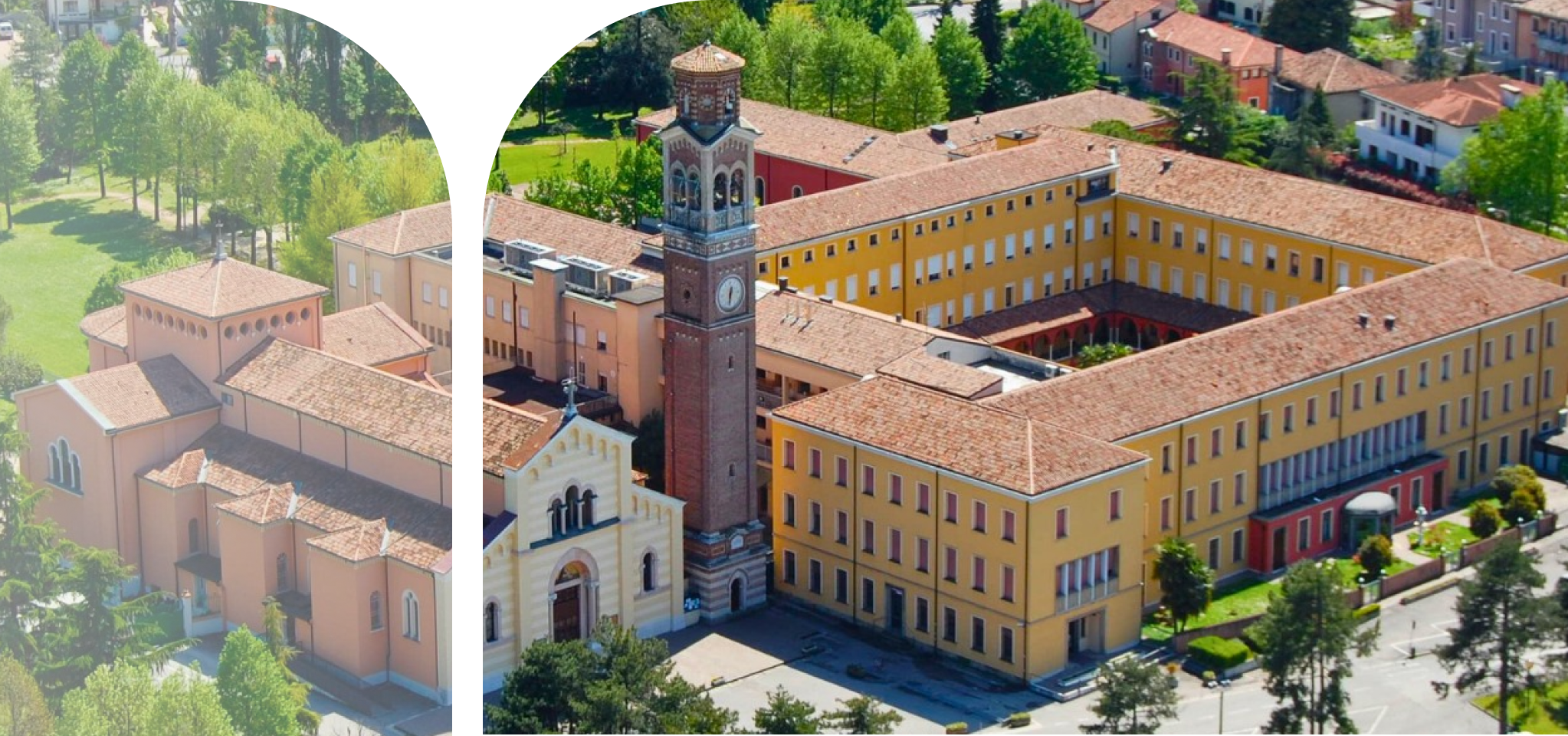
Saint Anthony Shrines stand in the places on the outskirts of Padova where Anthony spent the final days of his life. It was here, in fact, that the Saint lived the last month of his existence, as a guest of Count Tiso, who had previously welcomed a group of Franciscan friars. From Camposampiero, on 13 June 1231, sensing that the end was near, Anthony asked his fellow friars to take him to the convent in the city.
The Sanctuary of the Vision
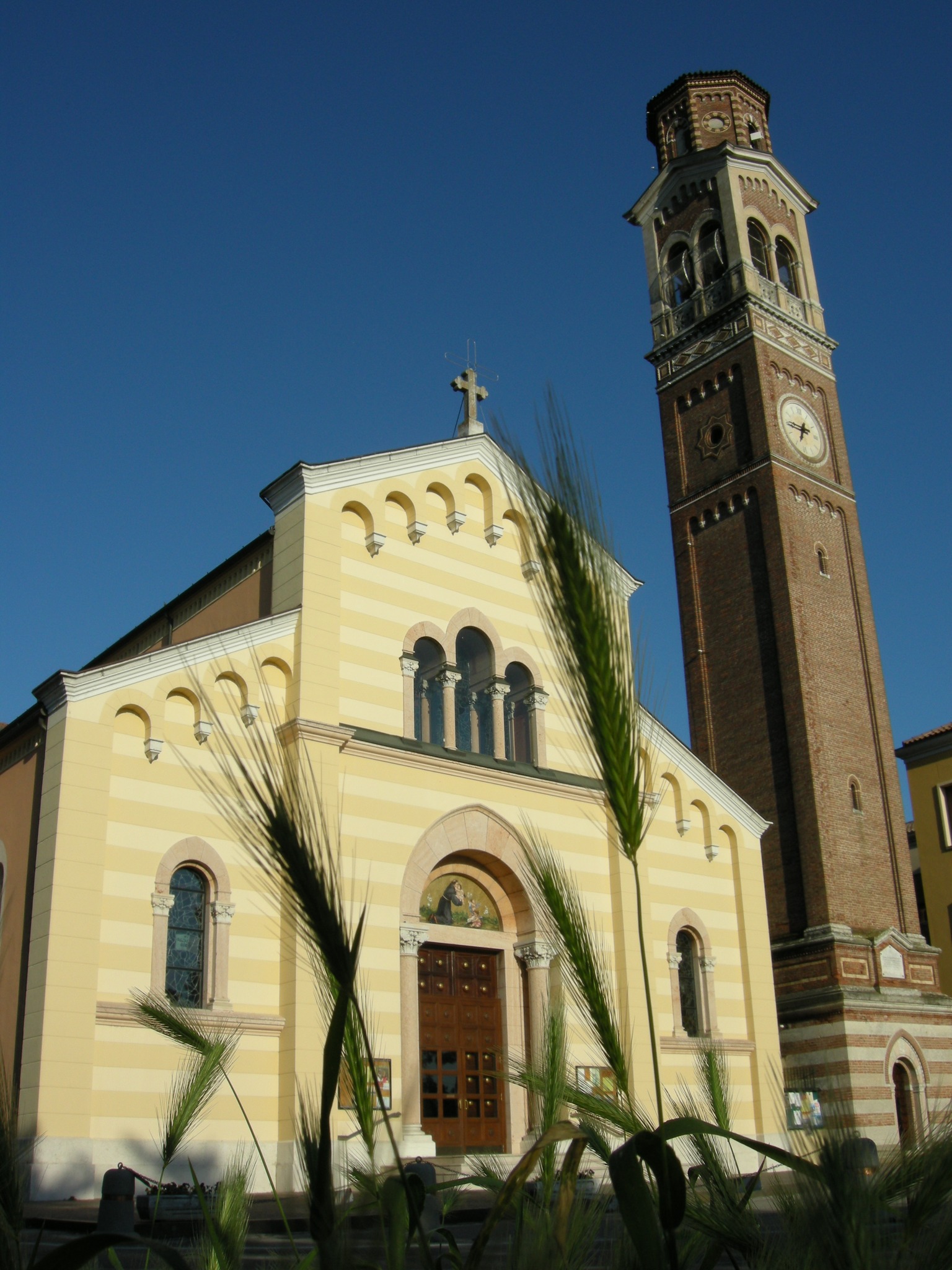
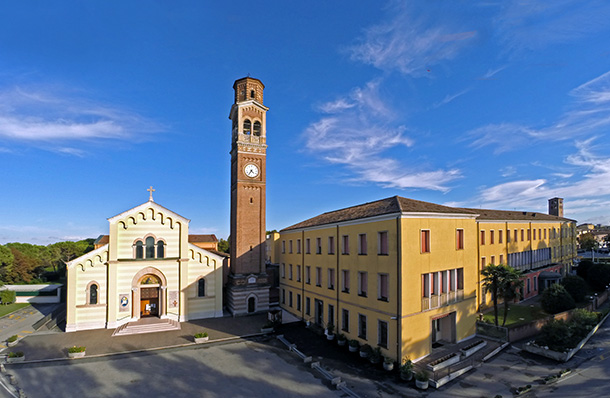
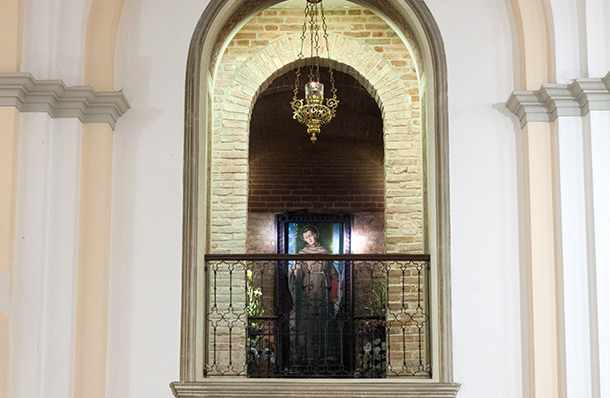
It preserves the small cell where Anthony had the mystical experience of contemplating the Infant Jesus. Originally, a small church dedicated to St John the Baptist stood here, where the Saint prayed, celebrated the Eucharist, and preached. Completely renovated and expanded in 1437 at the request of Count Gregorio Callegari of Camposampiero, it soon became a destination for continuous pilgrimages. However, the complex’s history was troubled: in 1769 the Venetian Senate suppressed many convents, including that of Camposampiero. The Anthony sites (church, convent, and lands) returned to the descendants of the Camposampiero family, who neglected the church’s upkeep; it was largely demolished by French vandalism in 1798. After various events, the municipality, which became the owner of the Anthony Oratories in 1854, arranged for their restoration. On 17 October 1895, at the urging of the authorities and the local community, the Conventual Franciscan Friars returned to take possession of the sites. The friars’ presence brought the Shrines back to life. A new church was planned, and on 26 December 1906 the first stone was laid for the current Sanctuary of St John the Baptist and St Anthony, also known as the Sanctuary of the Vision, an imposing three-nave structure inaugurated in 1909. The apse is dominated by the altarpiece by Pietro Paietta depicting St Anthony in ecstasy with the Infant Jesus (1909).
The Sanctuary of the Walnut Tree
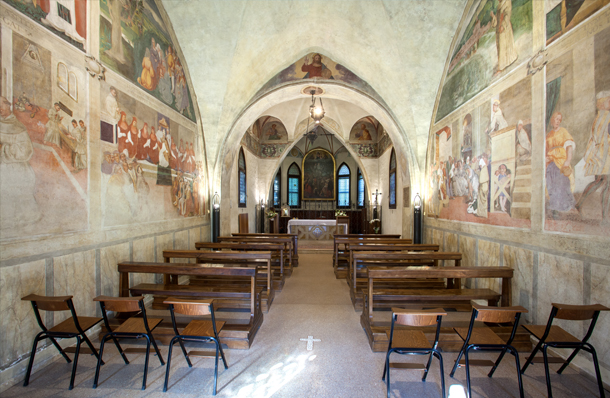
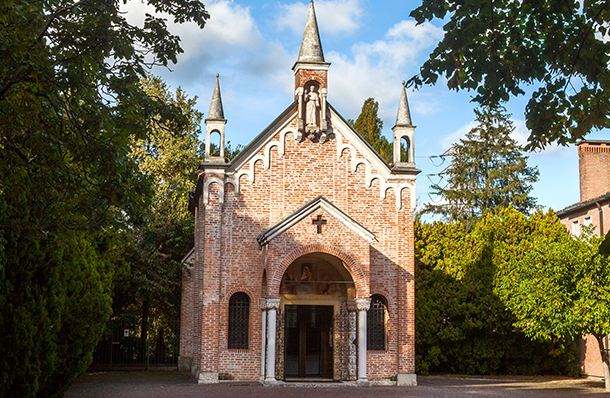
A short distance from the Sanctuary of the Vision, a charming tree-lined avenue of walnut and lime trees leads to the small Sanctuary of the Walnut Tree, commissioned by Count Gregorio Callegari of Camposampiero in 1432. This site was home to a walnut tree on which Count Tiso had built a small cell, used by the Saint as a hermitage for prayer and contemplation. Expanded in three successive phases, the sanctuary was enriched in the second half of the 15th century by a cycle of frescoes illustrating the best-known miracles of Saint Anthony. The apse is embellished by a fine altarpiece by Bonifacio De Pitati from 1536, depicting the Saint preaching from the walnut tree. In 1967, next to the small Sanctuary, a Poor Clares monastery was opened; they have transformed the Oratory into a house of prayer.
Other Anthony-related institutions
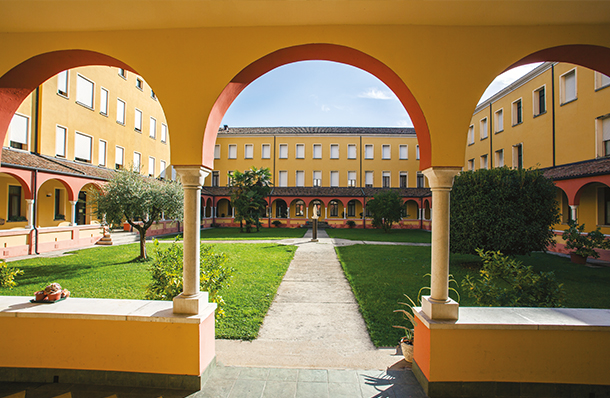
In addition to the convent, the complex includes the Oasi S. Antonio – House of Spirituality, which organizes courses and pathways for human and spiritual formation and welcomes pilgrims and visitors in general; the Oasi Giovani e Famiglie, a meeting house and educational center for children, teenagers, and young people, with reception and self-managed accommodation spaces for young people, children, and scout groups, both inside the facility and in the large external park; and the bookshop, where you can find Anthony-, Franciscan-, and Clare-related publications and in-depth materials, new religious titles, devotional and liturgical items, and herbal products.