Viale Sant’Antonio da Padova, 2 – 31100 Treviso
+39 0422 412373
sanfrancescotv@gmail.com
http://fratitreviso.it
Crossroads in the History of Treviso
In the heart of Treviso, the Church of St. Francis has traversed the centuries, standing out as a crucial element in the historical, artistic, and religious events of the city. It has overcome countless obstacles, including tragic events, constantly adapting and reaching us today enriched with renewed devotional, historical, and artistic value.
The first Penitent Friars, sent by Francis himself after his visit, arrived in Treviso as early as 1220. According to their custom, they settled in a secluded place near the leper house and the Cagnan river, close to a small Marian church. Here, they quickly gained the sympathy of the Treviso people, an affection that grew further with the fame of St. Anthony of Padua, who died in 1231 and was canonized in less than a year.
Although the exact start date of the work for the new building dedicated to St. Francis is not known, it seems that the area of the convent was completed first or in part. The construction of the church was likely completed in the last decade of the 13th century, as the bell tower was already planned in 1294.
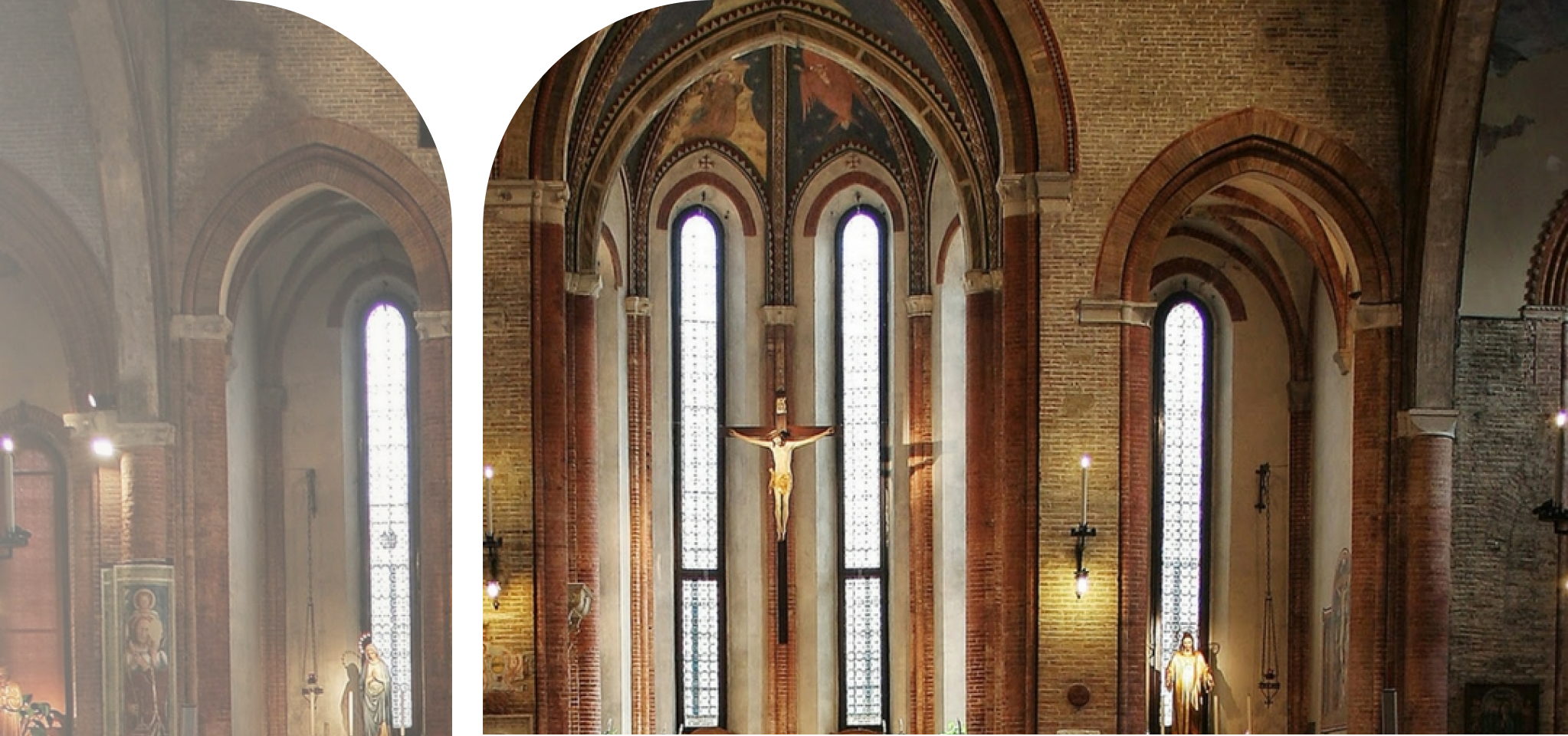
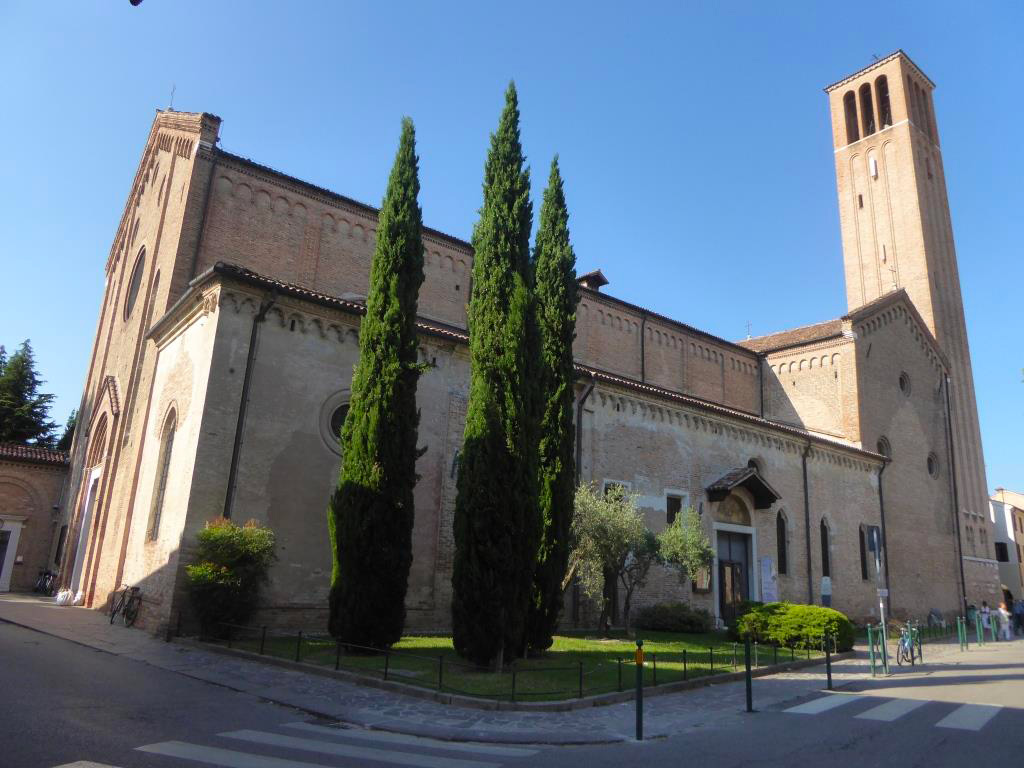
The architecture of the church is a fascinating example of the transition between Romanesque and early Gothic, with an Egyptian cross plan. Over the centuries, the church has faced numerous hardships: it suffered a fire in 1386, served as the seat of theological studies and the Inquisition tribunal, and housed noble chapels and tombs. For its valuable paintings and sculptures, it was a true treasure trove of art, earning it the title of “Pantheon of Treviso”. Unfortunately, all of this was lost or destroyed in 1797, when the Napoleonic army transformed it into a barracks, military hospital, and even a stable for horses. Following the Napoleonic period, the church underwent further alterations under the Austrian and Italian governments (1814-1866), which turned the large central nave into a three-story military warehouse, divided by scaffolding. In 1816, the 1408 bell tower (which had replaced the original from 1295) was also demolished due to structural issues.
It was only in 1920, after World War I, that the state handed over the church and convent to the Municipality of Treviso. After meticulous restoration, on October 4, 1928, the feast day of St. Francis, the complex was returned to the Bishop of Treviso, given back to us Conventual Friars Minor, and finally reopened for worship. Subsequently, the church was further beautified with the introduction of works of art, such as two detached frescoes by Mario Botter and a wooden crucifix from the late 17th century donated by the friars of Camposampiero. In 1935, what remained of the tomb of Pietro Alighieri, Dante’s son, from the former church of Santa Margherita, was reassembled and placed on the northern wall of the transept.